
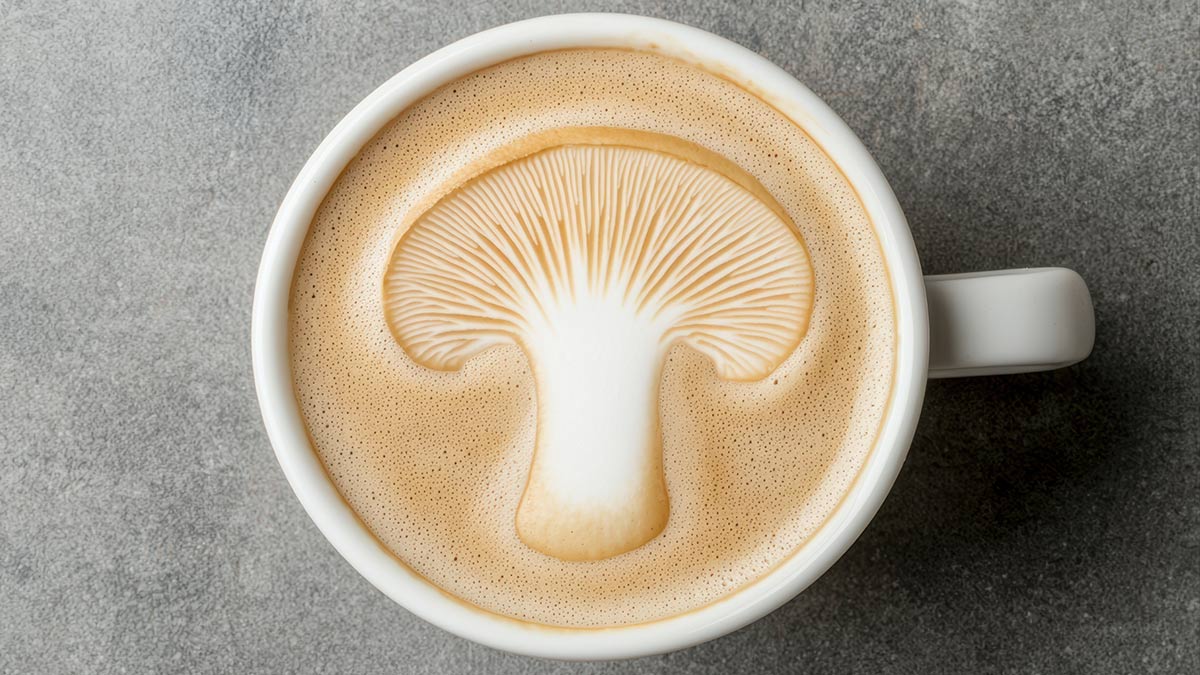
Functional mushrooms are having a moment—but the real question is whether they’re meaningful, effective, and worth adding to your routine.
Disclosure: I consult with M2 Ingredients. This educational Q&A explores the growing interest in functional mushrooms. I was not paid to write this blog post, and all opinions shared here are my own.
If you’ve spent any time in the wellness space lately, you’ve likely heard about functional mushrooms—from lion’s mane lattes to mushroom powders promising focus, calm, and energy. But as with many wellness trends, it can be hard to separate what’s meaningful from what’s marketing.
As a registered dietitian, my approach is always the same: focus on simple, sustainable tools that actually support how we feel day to day—especially for women juggling full schedules, careers, and everything in between.
After touring M2 Ingredients’ facility and learning more about the science and care behind their work, I was inspired to sit down with two of their experts to help bring more clarity to this growing category.
Inside M2 Innovation Lab

Functional mushrooms can be one of those tools. But like anything in wellness, how they’re used, and what you’re actually getting, matters.
And if you’ve been curious but unsure where to start, you’re in good company. Recent consumer data shows that while only about 12% of U.S. coffee drinkers have tried mushroom coffee, more than 80% are interested—highlighting just how much curiosity and confusion exists in this space.
Source: Glass Research survey of 1,000+ U.S. coffee drinkers, 2025, as cited by M2 Ingredients.
To bring clarity to the conversation, I sat down with two leaders in the space: Dr. Sandra Carter, co-founder of M2 Ingredients, and Dr. Julie Daoust, Chief Science Officer at M2 Ingredients, who brings decades of experience in the natural products industry.
Here’s what they want you to know.
Q&A with Dr. Sandra Carter, Co-Founder, M2 Ingredients

Patricia: For someone hearing the term for the first time, what are functional mushrooms?
Dr. Carter: Functional mushrooms are a group of mushrooms that have been traditionally used for their potential health-supporting properties. Unlike culinary mushrooms you might cook with, these varieties—such as lion’s mane, reishi, or cordyceps—contain bioactive compounds that may support areas like cognition, immune health, stress response, and overall well-being.
From a wellness perspective, they’re best thought of as one tool within a broader system—not a quick fix, but something that can support your routine when used thoughtfully.
Reishi mushroom

Patricia: What drew you to this space, and why did you believe in it early on?
Dr. Carter: I was drawn to functional mushrooms through my background in healthcare and nutrition science, where I saw growing interest in natural compounds that could support the body in more holistic ways. What stood out to me early on was the combination of traditional use and emerging research. There was clearly something meaningful here—but also a need to bring more rigor, consistency, and quality to how these ingredients were developed and delivered.
Patricia: As a female founder with a healthcare background, how did that shape the way you built M2 differently?
Dr. Carter: Coming from a healthcare background, I approached this space with a strong focus on efficacy and trust. It wasn’t enough for a product to sound good—it needed to deliver meaningful benefits in real-world use. That meant prioritizing quality sourcing, understanding how these compounds behave in different formats, and building products that align with how people actually live and consume them.
Patricia: Why are functional mushrooms getting so much attention right now?
Dr. Carter: We’re seeing a broader shift toward proactive, everyday wellness. People are looking for ways to support their energy, focus, stress levels, and long-term health in a more integrated way. Functional mushrooms fit into that conversation because they’re versatile and can be incorporated into daily routines—whether that’s coffee, smoothies, or other formats.
Patricia: What are some of the biggest misconceptions or myths you see about functional mushrooms?
Dr. Carter: One of the biggest misconceptions is that all mushroom products are the same. In reality, there can be significant differences in quality, formulation, and how much of the beneficial compounds actually make it into the final product. Just because something contains mushrooms doesn’t necessarily mean you’re getting meaningful benefits. That’s why formulation and delivery really matter.
Q&A with Dr. Julie Daoust, Chief Science Officer, M2 Ingredients

Patricia: What makes a mushroom “functional”?
Dr. Daoust: The term functional mushrooms refers to species that are used for their functional health benefits, such as digestive health, cognitive health, or sports performance, to name a few. The lines are somewhat blurred with culinary mushrooms, since some functional species like lion’s mane are purchased as produce but also used for their benefits beyond basic nutrition.
In a nutshell, functional mushrooms used to be called “medicinal mushrooms,” just like botanicals were once broadly referred to as medicinal herbs. To avoid confusion with pharmaceuticals—and to better reflect their use in generally healthy populations—the term “functional mushrooms” became more widely used.
Patricia: Lion’s mane is especially popular right now. Why do you think it is resonating with so many people?
Dr. Daoust: The emerging research on lion’s mane and its cognitive health benefits is very exciting. Many people are seeking ways to support focus and cognitive performance, but also to age well over time—and lion’s mane speaks to both of those needs.
It also has additional benefits, such as supporting digestive health and providing antioxidant properties. It’s also a visually unique mushroom that you can find in the produce section or at a local farmer’s market, so people are drawn to it not only for its potential benefits but also as a way to incorporate it into their diet.
Lion’s mane mushroom

Patricia: That aligns with what we’re seeing in consumer data as well—interest in lion’s mane is rising quickly, with many people specifically seeking support for focus, clarity, and mental performance as part of their daily routine. What does the science tell us so far about functional mushrooms, especially around stress and energy—and what are researchers still learning?
Dr. Daoust: There’s a growing body of research suggesting that certain mushrooms may support the body’s stress response and help promote more balanced energy. That said, this is still an evolving area. We’re continuing to learn more about how different species work, optimal dosing, and how to best deliver these compounds in ways that are effective and consistent.
Patricia: What should consumers be aware of when looking for a credible functional mushroom product?
Dr. Daoust: Food safety certifications are paramount, since mushroom cultivation needs to be highly controlled to avoid contamination. Mushrooms are bioaccumulators, meaning they can concentrate pollutants found in their environment if not grown properly.
This is one of the most important considerations. Consumers should look beyond the label and evaluate the quality and sourcing of the mushrooms, how the product is formulated, and whether the delivery method actually preserves and delivers the beneficial compounds. Not all formats are created equal, and in some cases, the way a product is made can significantly impact whether it works.
Miatake mushroom

Patricia: You started the Functional Mushroom Council. Why did you start it, and what should people know about its role?
Dr. Daoust: The Functional Mushroom Council was created to help bring more education, transparency, and consistency to the category. As interest in mushrooms grows, it’s important that consumers—and brands—have access to accurate, science-based information. The goal is to support responsible growth of the industry and help people make more informed choices.
Patricia: Where can people learn more about functional mushrooms and stay up to date on the latest research?
Dr. Daoust: A great place to start is the Functional Mushroom Council, which was created to provide education and science-based information about functional mushrooms. M2 Ingredients also shares research, product innovation, and consumer insights through our website and newsletter.
Another purpose of the FMC is to provide leadership in setting and evolving quality standards for the mushroom category, helping ensure that products brought to market are safe and efficacious.
What to Keep in Mind
As with any wellness trend, it’s easy to get caught up in the excitement. But what I love about this conversation is the reminder that details matter. Functional mushrooms can be part of a supportive routine—but they work best when paired with the foundational habits that truly support how you feel day to day: nourishing food, quality sleep, movement, and small moments to reset.
If you’re curious, use this as a starting point—and keep asking thoughtful questions about quality, formulation, and what actually fits into your real life.


 Order Now