

Hydration doesn’t have to be complicated. Here’s how to know when water is enough and when electrolytes may help support your everyday energy, focus, and well-being.
Disclosure: I’ve partnered with Ultima Replenisher on this blog post. All opinions are my own.
You know those days when you’re drinking water, doing all the “right” things, and still feel a little foggy, sluggish, or off?
Maybe it’s the afternoon slump. Maybe it’s a busy travel day. Maybe it’s a warm summer afternoon, a packed schedule, or a workout squeezed in between everything else on your calendar.
Hydration is one of those wellness habits that sounds simple: drink more water! But in real life, it can feel a little more confusing, especially with so many electrolyte drinks, powders, tablets, sports drinks, and rehydration products out there.
Do you need electrolytes every day? Is water enough? Are all electrolyte products basically the same? Not exactly.
Start With What Your Body Actually Needs
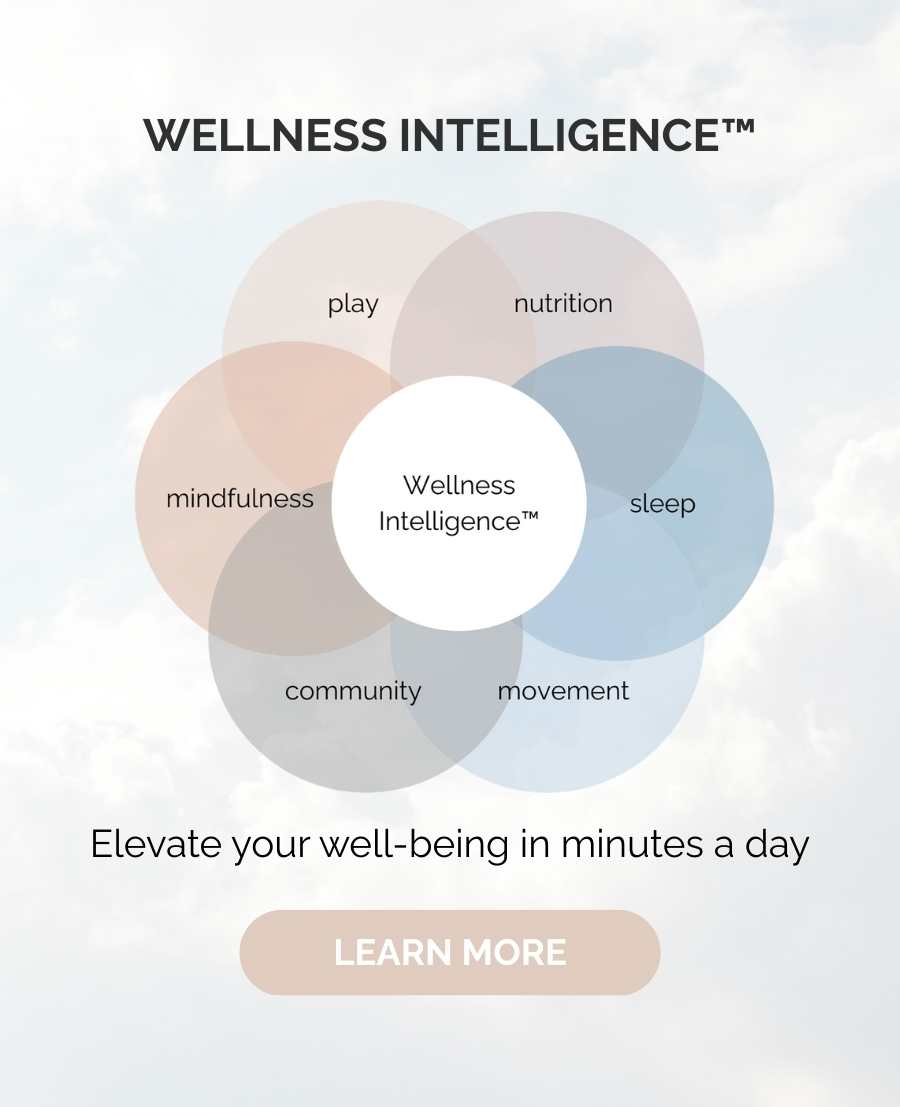
Hydration doesn’t need to become another complicated wellness task. In my Wellness Intelligence work, I always come back to simple, realistic habits that support how you feel and function in your actual life. And hydration fits beautifully into that approach.
For most of us, most of the time, it starts with water. Electrolytes can then be a helpful complement depending on your needs, activity level, health status, and routine.
I like to think of it as You + Hydration, a simple way to consider the fluid and electrolyte balance that helps support your energy, focus, and everyday well-being.
Not Every Hydration Need Is the Same
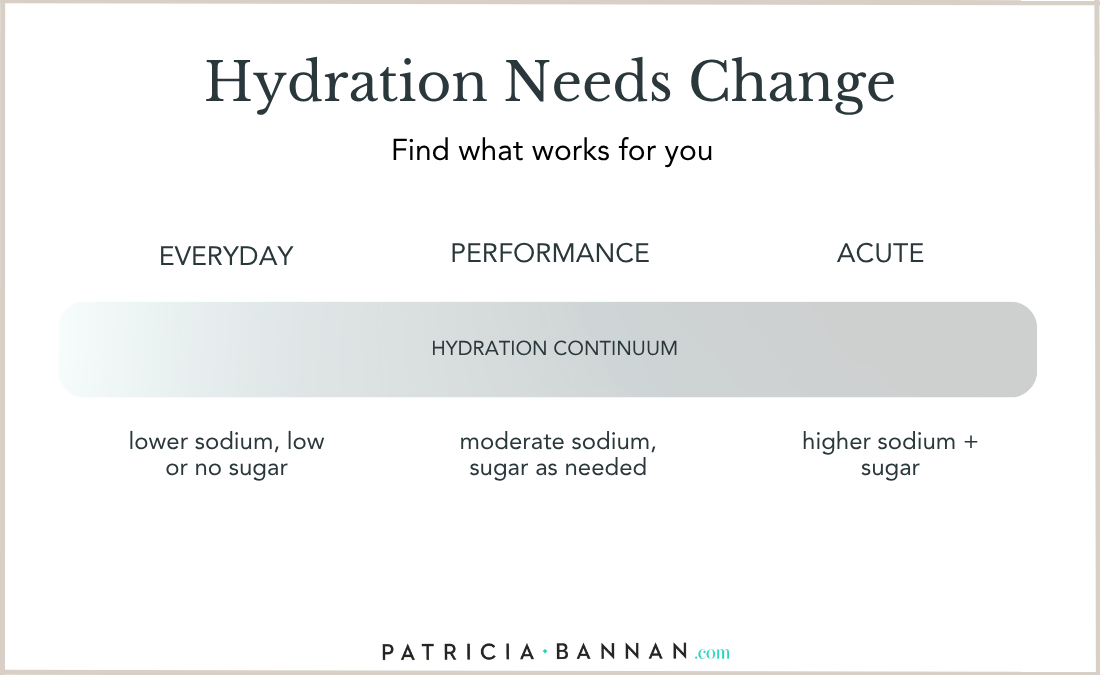
One of the most helpful ways to think about hydration is as a continuum.
Everyday hydration is the place where most adults live most of the time. This includes your ordinary workday, errands, school drop-off, light movement, travel, warm weather, and all the moments when you want to feel clear, steady, and energized without overcomplicating things.
Then there is performance hydration, which is more relevant during prolonged exercise, intense activity, or heavy sweating. Sports drinks can be useful here because they often contain more sodium and carbohydrates to support performance and recovery.
And on the other end, there is acute rehydration, such as during illness, significant fluid loss, or dehydration. This is when oral rehydration solutions may be appropriate because they are specifically designed to help replace fluid, sodium, and glucose quickly.
For everyday hydration, water is still the foundation. But a daily electrolyte blend can help complement water, especially when it makes hydration more enjoyable and easier to stick with.
Watch: Hydration, Simplified
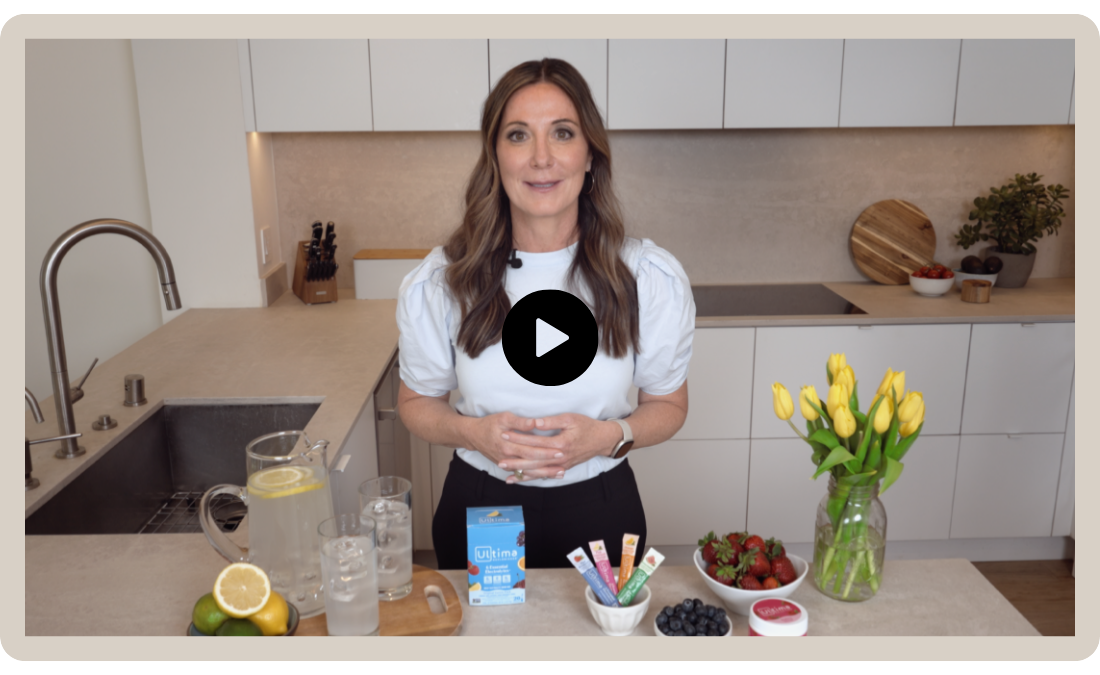
Hydration needs are not one-size-fits-all. In this short video, I partnered with Ultima Replenisher to break down the hydration continuum, where everyday You + Hydration fits, and the role electrolytes can play in supporting daily hydration habits.
Electrolytes Are Minerals Your Body Uses Every Day
Electrolytes are getting a lot of attention lately, but what exactly are they? Electrolytes are minerals your body uses every day to help keep fluids balanced and support things like muscle movement, nerve signaling, and energy production. You may hear about them most often around exercise, but they play a role in everyday wellness too.
Key electrolytes include:
- Potassium: Supports normal blood pressure and helps your body maintain fluid balance
- Magnesium: Supports muscle and nerve function, energy production, and bone health
- Calcium: Supports bones and teeth, muscle function, and normal nerve signaling
- Sodium: Helps regulate fluid balance, though many Americans already consume more than recommended
- Chloride: Works with sodium to help maintain the body’s fluid balance
- Phosphorus: Supports energy production and bone health
In other words, electrolytes are part of the behind-the-scenes work that helps your body function well.
Three Electrolytes Worth Paying Attention To
Sodium tends to get a lot of attention in hydration conversations, and for good reason. It’s an essential electrolyte. But for many Americans, the issue is not getting too little sodium, it’s getting too much.
At the same time, many people fall short on other important minerals. That is why I love shifting the conversation from “more electrolytes” to “the right electrolytes for the right situation.”
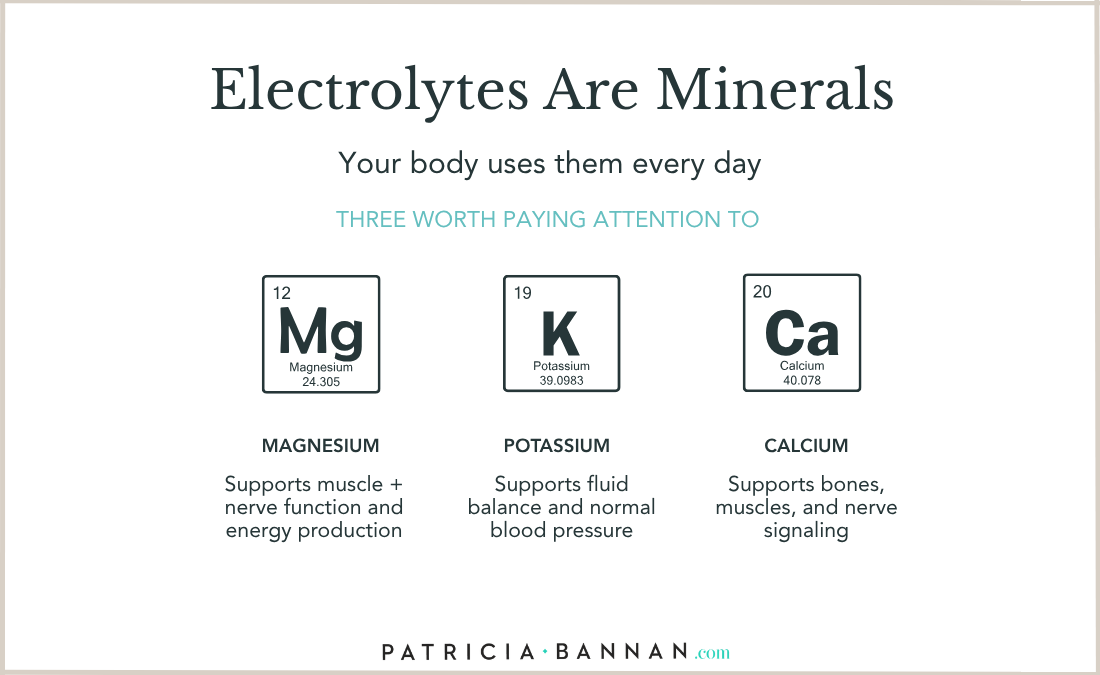
Here are three to keep in mind:
- Potassium helps support normal blood pressure and fluid balance.
- Magnesium supports muscle and nerve function, energy production, protein synthesis, and bone health.
- Calcium supports bones and teeth, muscle function, blood clotting, and other essential processes.
Food Still Comes First

This does not mean an electrolyte drink replaces a balanced diet. Food always matters. Fruits, vegetables, beans, lentils, nuts, seeds, dairy foods, fortified foods, and other nutrient-rich options can all help support mineral intake.
But pairing water with an everyday electrolyte option that includes minerals like magnesium, potassium, and calcium may be one way to support a more consistent hydration routine.
Could Hydration Help You Feel More Energized and Focused?
When you feel tired, foggy, or unfocused, hydration may not be the first thing you think about. You might blame your packed schedule, lack of sleep, or too much screen time. And of course, those things can absolutely play a role. But hydration is also worth checking in on.
Your body loses water continuously throughout the day through breathing, skin, and normal body functions, even when you are not exercising. Even mild under-hydration may affect your mood, focus, and how clearly you think.
Electrolytes also play a role here. Magnesium is involved in cellular energy production, while minerals such as magnesium, calcium, and sodium help support normal nerve signaling.
Hydration is not the answer to every low-energy day. Sometimes you need more sleep, a nourishing meal, movement, a real break, or support with stress.
But when you feel foggy or off, your water bottle is one of the simplest places to start.
Make Hydration Easier and More Enjoyable

The best hydration habit is not the most perfect one. It’s the one you’ll actually stick with.
Here are six simple ways to make hydration easier:
- Start your morning with water. Pair it with something you already do, like making breakfast, taking vitamins, or starting your coffee or tea.
- Keep water visible. A reusable water bottle on your desk, in your car, or next to your bag is easier to remember than one tucked away.
- Sip consistently. Try drinking throughout the day instead of realizing at 7 p.m. that you barely had any water.
- Make it enjoyable. If plain water feels uninspiring, adding flavor can help. I love having a variety of flavors to choose from because when something tastes good, you are more likely to drink it consistently.
- Choose hydration support based on the situation. Your needs after a gentle walk are different from your needs after a long run, a hot yoga class, illness, or a summer travel day.
- Pay attention to your body and routine. Climate, activity level, medications, and individual health conditions can all influence hydration needs.
My Everyday Electrolyte Pick
For everyday hydration, I look for an option that complements water without adding the higher amounts of sodium or sugar designed for intense athletic performance or acute rehydration. Ultima Replenisher is a low-sodium, zero-sugar electrolyte option designed to support everyday hydration for many adults, with electrolytes including magnesium, potassium, and calcium.
It also comes in a variety of great flavors like watermelon and strawberry kiwi, and pink lemonade, which can make water feel a little more enjoyable and the habit easier to stick with. One of my personal favorites is peach green tea.
When You May Need a Different Type of Hydration Support
Everyday electrolyte blends can be helpful, but they are not meant for every situation. Sports drinks may be useful during prolonged, intense exercise or heavy sweating. Oral rehydration solutions may be appropriate during illness, acute dehydration, or significant fluid loss.
And if you have kidney disease, heart conditions, or complex medication regimens, it is always best to ask your healthcare provider about your individual hydration needs.
This is why the hydration continuum is so helpful: it reminds us that the “best” option depends on the situation.
Water First, With Support That Fits Your Life
Hydration does not need to become another demanding wellness goal. Start with water. Make it easy to reach for. Pay attention to how you feel. Then add electrolyte support when it fits your needs, routine, and preferences.
For many everyday situations, a low-sodium, low- or no-sugar electrolyte blend can complement water and make hydration feel more enjoyable and consistent.
Because the best hydration habit is not the most complicated one. It is the one that fits your life, helps you feel better, and is easy enough to keep up.
Learn More
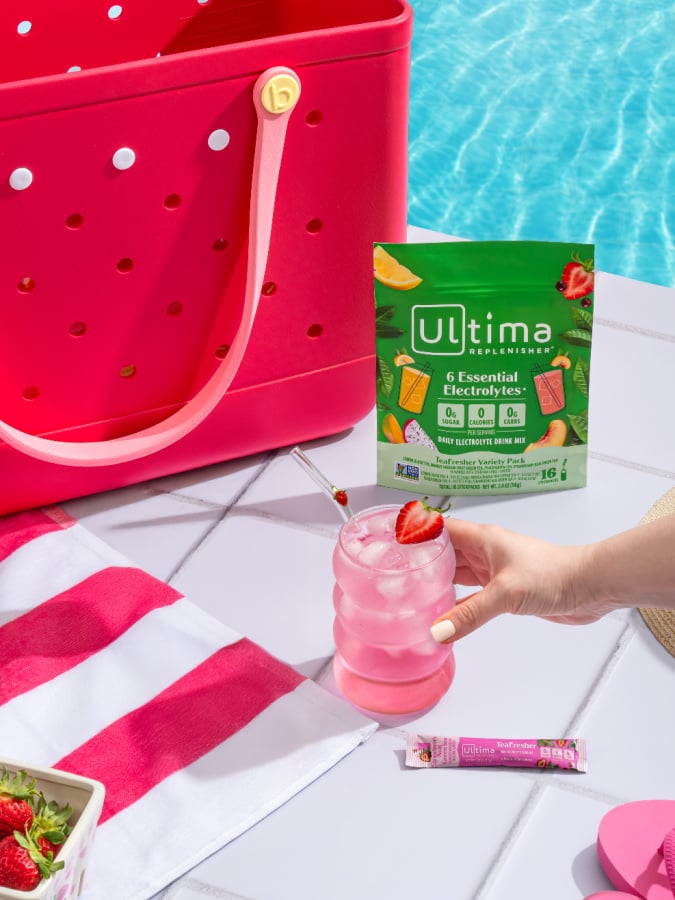
Explore Ultima Replenisher for everyday hydration support and visit Hydration U for health professional education.



 Order Now