

June is Brain Awareness Month — and there’s one brain-related topic that doesn’t get nearly enough attention: burnout.
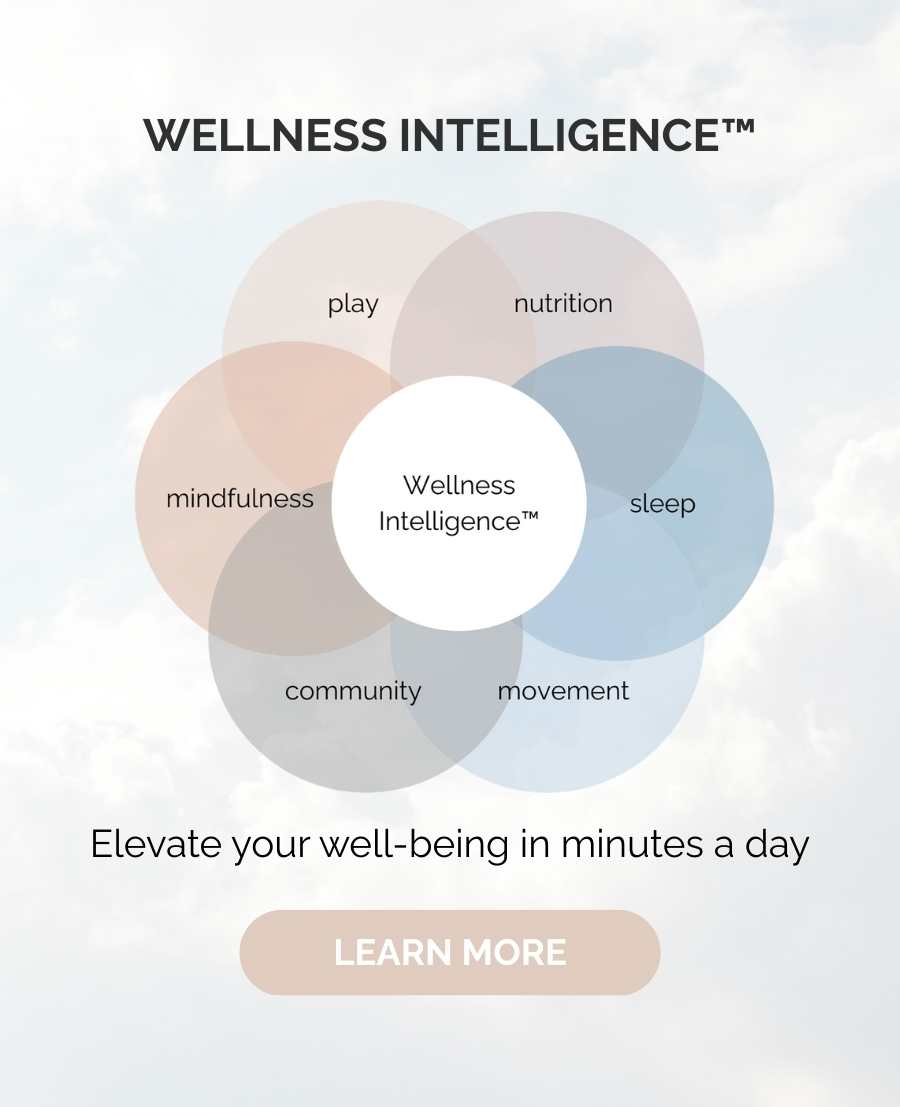
I recently had the privilege of presenting Burnout and the Brain: Nutrition and Lifestyle Tools for Resilience alongside the brilliant Maggie Moon, MS, RD, author of The MIND Diet, at the Today’s Dietitian Symposium. Maggie brought the brain science; I brought the real-life application through my Wellness Intelligence™ coaching framework and my work around burnout recovery in From Burnout to Balance.
 While our session was designed for health professionals, I couldn’t help but think about the many career-driven women I work with every day — women navigating demanding jobs, family responsibilities, caregiving, and the invisible mental load that often comes with holding everything together.
Because burnout isn’t limited to one profession. It affects women from all walks of life, which is why this conversation deserves to extend far beyond a conference room.
First, Let’s Clear Something Up: Burnout Is Not a Character Flaw
If you’ve been feeling exhausted, foggy, detached, or like you’re going through the motions, that’s not weakness. That’s not laziness. That’s not a character flaw.
It may be burnout — or your brain and body signaling that something needs attention.
In 2019, the World Health Organization included burnout in the ICD-11 as an “occupational phenomenon,” defining it as a syndrome resulting from chronic workplace stress that has not been successfully managed.
While that definition focuses on workplace stress, many women know burnout doesn’t always stay neatly inside the boundaries of work. It can be intensified by the pressure to manage careers, caregiving, relationships, household responsibilities, and the invisible mental load.
The key point: burnout is not a personal failure. It’s information — and often a wake-up call that something needs to shift.
Stress vs. Burnout: What’s the Difference?
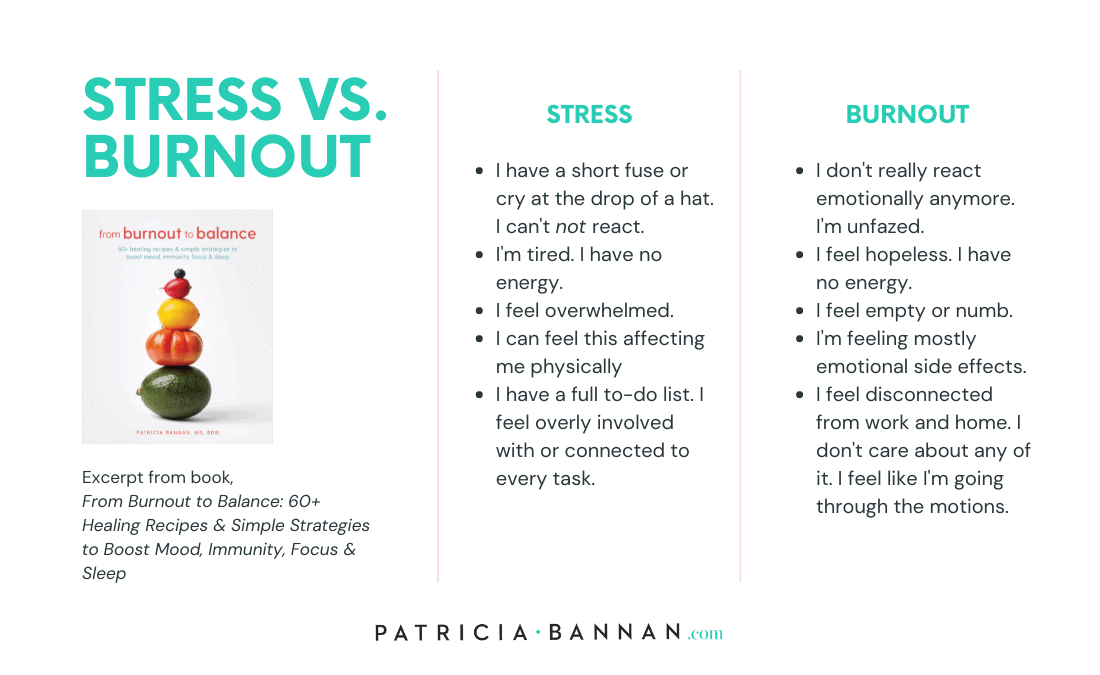
Stress and burnout often get used interchangeably, but they’re not the same. I dive into this even more in Stress vs. Burnout: Key Differences and Signs to Look For.
Stress can feel like too much: too much pressure, too many demands, too many decisions, too much on your plate.
Burnout can feel like too little: too little energy, too little motivation, too little meaning, too little left to give.
With everyday stress, rest often helps. With burnout, rest alone may not fully restore you — because burnout is not only about being tired. It’s often about being depleted.
What Burnout Can Do to Your Brain

Burnout doesn’t only affect how you feel emotionally. It can affect how your brain functions day to day. Chronic stress and burnout can make it harder to focus, remember details, regulate emotions, and make decisions. Even small choices can start to feel overwhelming. Hello, decision fatigue.
There’s a reason for that. When we experience chronic stress, the nervous system can get stuck in sympathetic overdrive — the fight-or-flight state. When that happens, the body prioritizes survival over recovery. Digestion, sleep, restoration, and clear thinking can all suffer.
Stress is designed to rise and resolve. But when the stress cycle never fully completes — when we keep pushing, producing, caregiving, performing, and going — the cumulative effect can show up in the brain and body.
That foggy, fried feeling is not “all in your head.” It may be your body asking for support.
Burnout Signs You Might Be Missing
Burnout doesn’t always look like a dramatic collapse. Often, it shows up quietly.
It may look like chronic fatigue, disrupted sleep, headaches, digestive issues, irritability, brain fog, forgetfulness, difficulty concentrating, withdrawing from people you love, procrastinating, or feeling like the smallest task requires enormous effort.
For many career-driven women, burnout can be especially tricky because you may still be functioning. You may still be showing up. You may still be getting things done. But inside, you feel like you’re running on fumes.
If you recognize yourself here, awareness is the first step. Not judgment. Awareness.
What Can Help? The 3-S Framework

This is where real-life application matters.
The 3-S Framework is something I developed through my work in Wellness Intelligence™. It’s simple by design, because when you’re burned out, you don’t need another complicated system. You need one clear next step.
The 3 S’s are: Self-Align, Signals, and Systems.
1. Self-Align
Self-Align means getting clear on what you need in this season of your life, so you’re not moving through your days on autopilot.
Sometimes alignment means making a bigger change. More often, it means staying connected to yourself while moving through a season you can’t immediately change — a demanding work project, caregiving, parenting, or simply carrying more than usual.
Ask yourself: What do I need more of right now? What do I need less of? What would help me feel more supported?
The goal is clarity, not perfection.
2. Signals
Signals are the ways stress and depletion show up for you.
Where do you notice it first — in your body, mood, focus, relationships, sleep, or food choices?
Maybe it’s irritability, brain fog, poor sleep, digestive changes, skipped meals, sugar cravings, resentment, or losing interest in things that normally bring joy.
Your signals are not failures. They are information.
The earlier you recognize them, the more choices you have.
3. Systems
Systems are small supports that help protect your energy before you hit the wall.
This doesn’t have to mean a full life overhaul, a perfect morning routine, or a brand-new meal plan. Sustainable wellness usually starts smaller.
A system might be a five-minute transition ritual between work and home, keeping easy proteins on hand, putting your phone outside your bedroom, blocking one evening with no plans, or setting one boundary you can actually hold.
The better question is not: What’s the best habit?
It’s: What’s the most realistic next step for me right now, in this season of my life?
A Note on Nutrition and the Burned-Out Brain

As Maggie said in our talk, “Food is not the whole answer to burnout, but it is a daily one.”
When we’re depleted, we often skip meals, rely on caffeine and sugar, graze reactively, or eat whatever is easiest because we don’t have the bandwidth to think about one more thing.
That’s understandable. It also can make everything harder: mood, focus, energy, sleep, and stress resilience.
Five Simple Ways to Support Your Brain
A few simple shifts can help support your brain and body when you’re feeling burned out:
- Eat breakfast with protein to support steadier energy, mood, and focus.
- Don’t skip lunch, especially if you’re running on cortisol and caffeine.
- Pair carbohydrates with protein or healthy fat for more sustained energy.
- Add one anti-inflammatory food daily, such as berries, leafy greens, salmon, walnuts, beans, or extra-virgin olive oil.
- Hydrate, because even mild dehydration can affect mental clarity and energy.
And when cooking feels impossible? Try quick-assembly meals: Greek yogurt with berries and nuts, scrambled eggs and fruit, hummus with veggies and whole-grain pita, or rotisserie chicken with bagged salad.
Some is better than perfect. Especially when you’re burned out.
Self-Compassion Is Not Optional

Burnout often comes with a relentless inner critic — the voice that says: You should be doing more. You’re falling behind. You should be able to handle this. Why can’t you get it together?
But that kind of self-talk doesn’t help you recover. It keeps your nervous system on high alert.
Try shifting:
- “I’m failing” to “I’m adjusting my approach.”
- “I should be doing more” to “I’m doing what I can with the capacity I have today.”
- “I’m totally overwhelmed” to “What is one supportive step I can take right now?”
We don’t build sustainable health from punishment. We build it from support.
Your Next Step
If any of this resonated, here’s your one action for today.
Choose one part of the Wellness Intelligence™ 3-S Framework:
- Self-Align: What do I need more or less of right now?
- Signals: What is one sign that tells me I’m getting depleted?
- Systems: What is one small support I can put in place this week?
Write it down. Burnout recovery begins by rebuilding trust with yourself in small ways, one step at a time.
Want to Go Deeper?
For more on this topic, I was thrilled to join fellow dietitians Toni and Jenny of the PATH Positive Approaches to Health podcast for a warm, honest conversation about burnout, balance, and what it really looks like to support yourself in real life. You can listen to the episode here.
Want to go deeper? My book From Burnout to Balance walks through this framework with practical tools, meal ideas, and realistic strategies to support energy, resilience, and well-being.



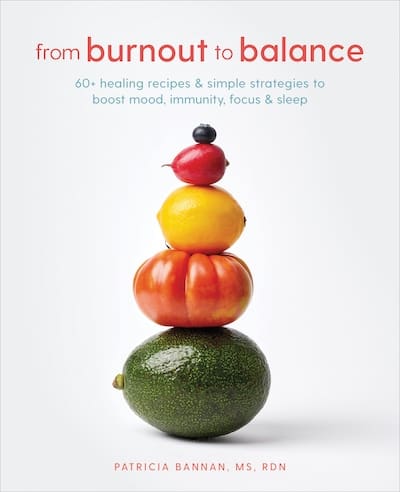
 Order Now